Yayoi Kusama at Museum Ludwig
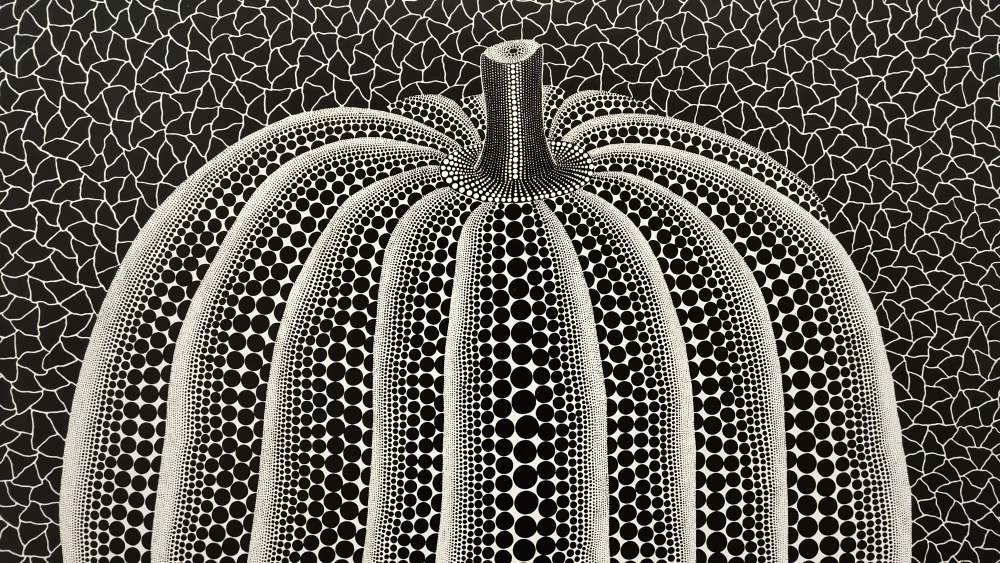
Pumpkins bring about poetic peace in my mind.
Pumpkins talk to me.
Pumpkins, pumpkins, pumpkins.
That’s how Kusama celebrates her love for pumpkins in the poem On Pumpkins from 2010. Pumpkins, polka dots, infinity nets—all of Kusama’s trademarks can be found in Pumpkin (1991) above. They are the result of her working through the vivid hallucinations she has been suffering from since her childhood. Turning to nature, to her dot and lattice structures, to her multifaceted art in general is Kusama’s way of coping with stress and trauma, of which she’s been having no shortage: The horrors of the Second World War and the atomic bombings of Japan; rejection of her art in Japan; intense years in New York City between flower power, anti-Vietnam War movements, and her own emancipation; the complicated relationship with her parents, but also the death of her parents; living in and working from a clinic in Tokyo.
Kusama’s life and work almost spans a century! No wonder that the exhibition at Cologne’s Museum Ludwig is massive, long sold out, and well on the way to becoming the most visited exhibition in the city’s history. (I managed to visit thanks to Kleinanzeigen and a very nice last-minute, non-scalping seller, who sold their ticket for the official price of 19.80 €.)
Based on the queues and the general movement of my fellow visitors, I assume that many came for the spectacle that the Kusama brand promises: Huge Infinity Mirror Rooms, a room full of fluorescent sticky dots lit with black light, big sculptures and installations, the vibrant colors of her large-format acrylic-on-canvas works, some of that on the museum’s rooftop terrace in front of the Cologne Cathedral. It was fabulous.
BUT—and I surprised myself a bit there: My personal highlights were the more subtle, tuned-down, almost tender pieces of the exhibition; her proven talent in graphic design, her etchings on paper, her poetry.
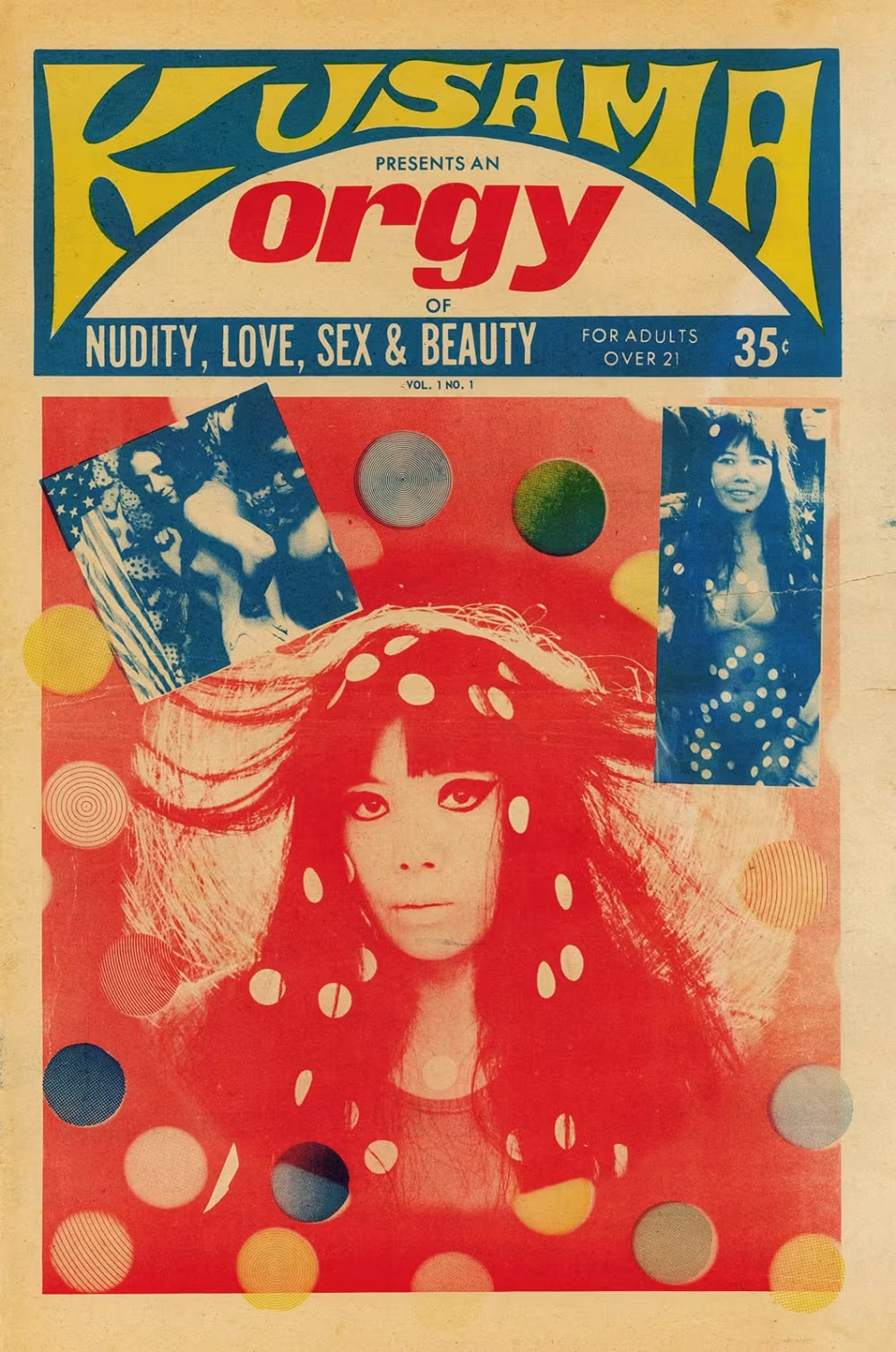
Granted, I am not surprised by how I’m drawn to graphic design, DIY magazines, and collaging lately, as I full-on plunged into the world of zines and zine-making and now see pioneers in spirit and inspiration everywhere. Just look at the art direction of the magazine Kusama Presents an Orgy of Nudity, Love, Sex & Beauty that she used to advertise her performances and happenings in NYC where … well, the name says it all. Dissolution of boundaries, dispensation with bourgeois restraints.
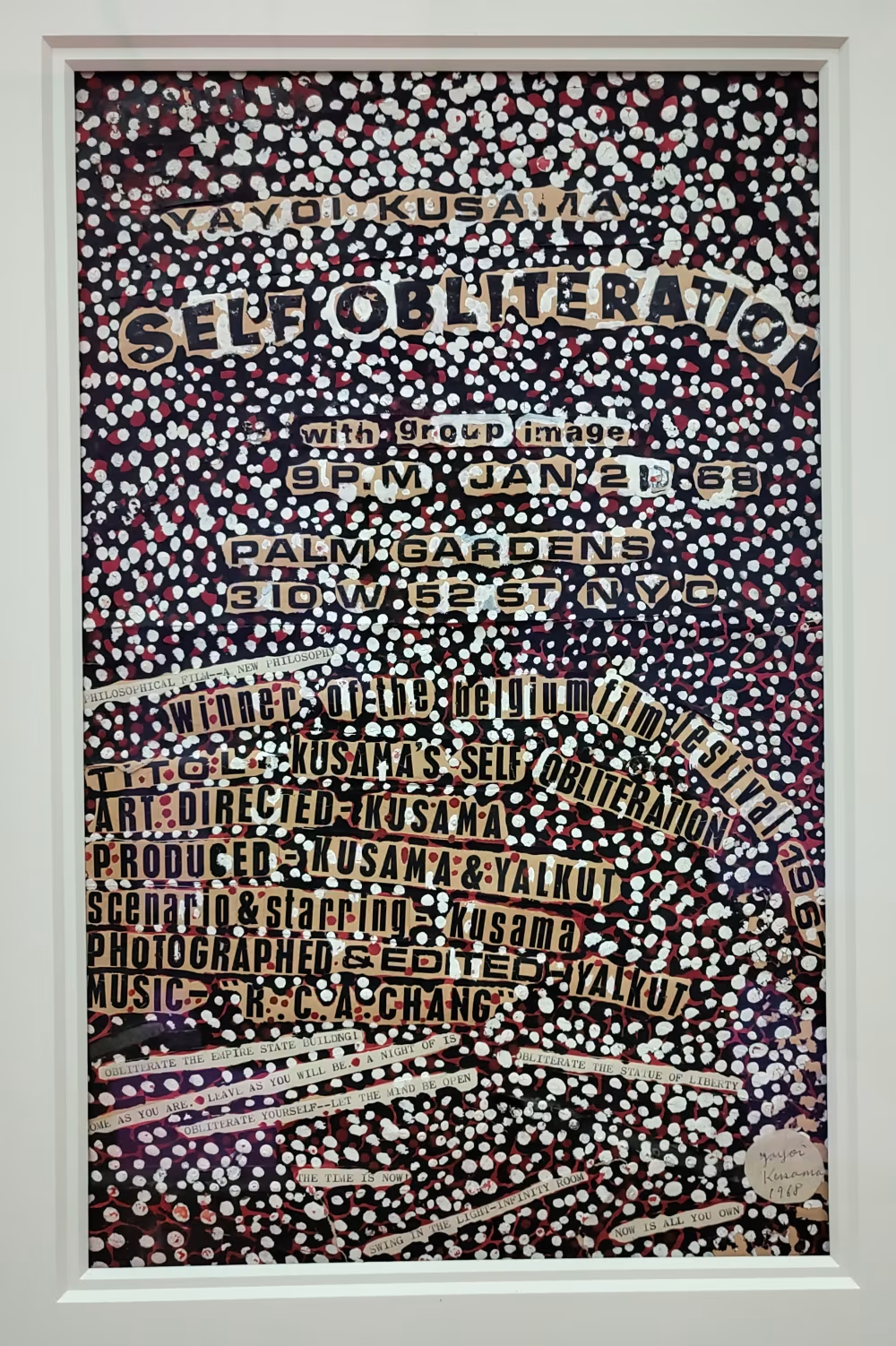
Or her almost punk-rock-y invitation to a screening of her experimental film Self-Obliteration that documents the events outlined above.
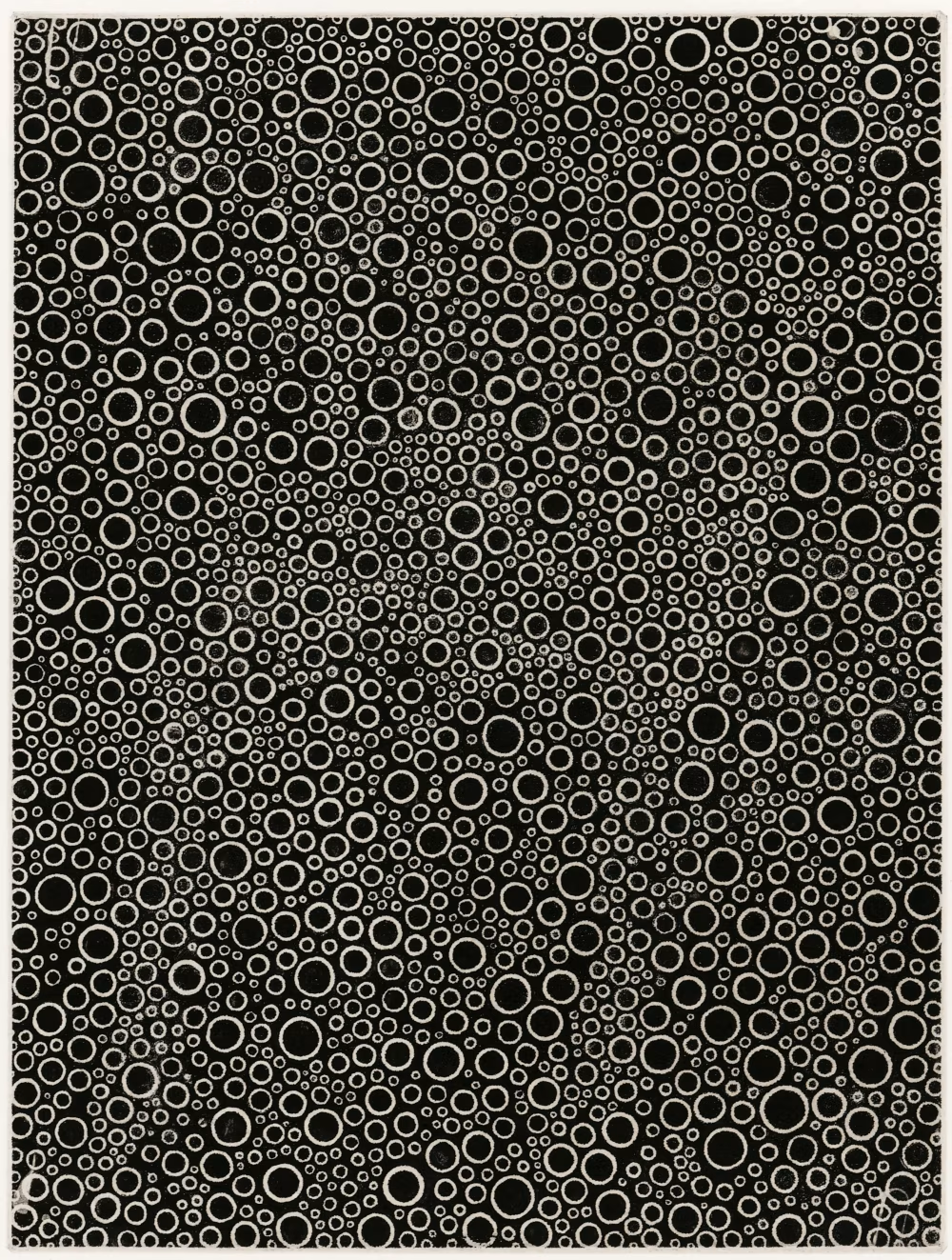
Her etchings on paper have a pulling effect on me for another reason: They inspire my own pen-plotting art, not unlike the works of Käthe Kollwitz. The meticulous handicraft that is necessary to create this intense texture, depth, and complexity deeply fascinates me and I can’t wait to work on my own ideas on how to use and alter this style for my art and art-ified data illustrations. As an example, I picked Stars (1995) which could also be the outcome of a circle packing algorithm.
Other etchings that go into my inspiration drawer: different Infinity Nets (1953–1984), City (1993), River Wave (1993), Pistils and Stamens (1994), Dots Accumulation (1993), and Bud (1995).
When it comes to acrylic on canvas, it’s as if I almost lose interest because color is added into the mix. The artworks seem to have less depth, no source of friction, and hence less appeal to me. Two beautiful exceptions: Necklace of the Sun (1987) and Hymn of Life (1988, see below).
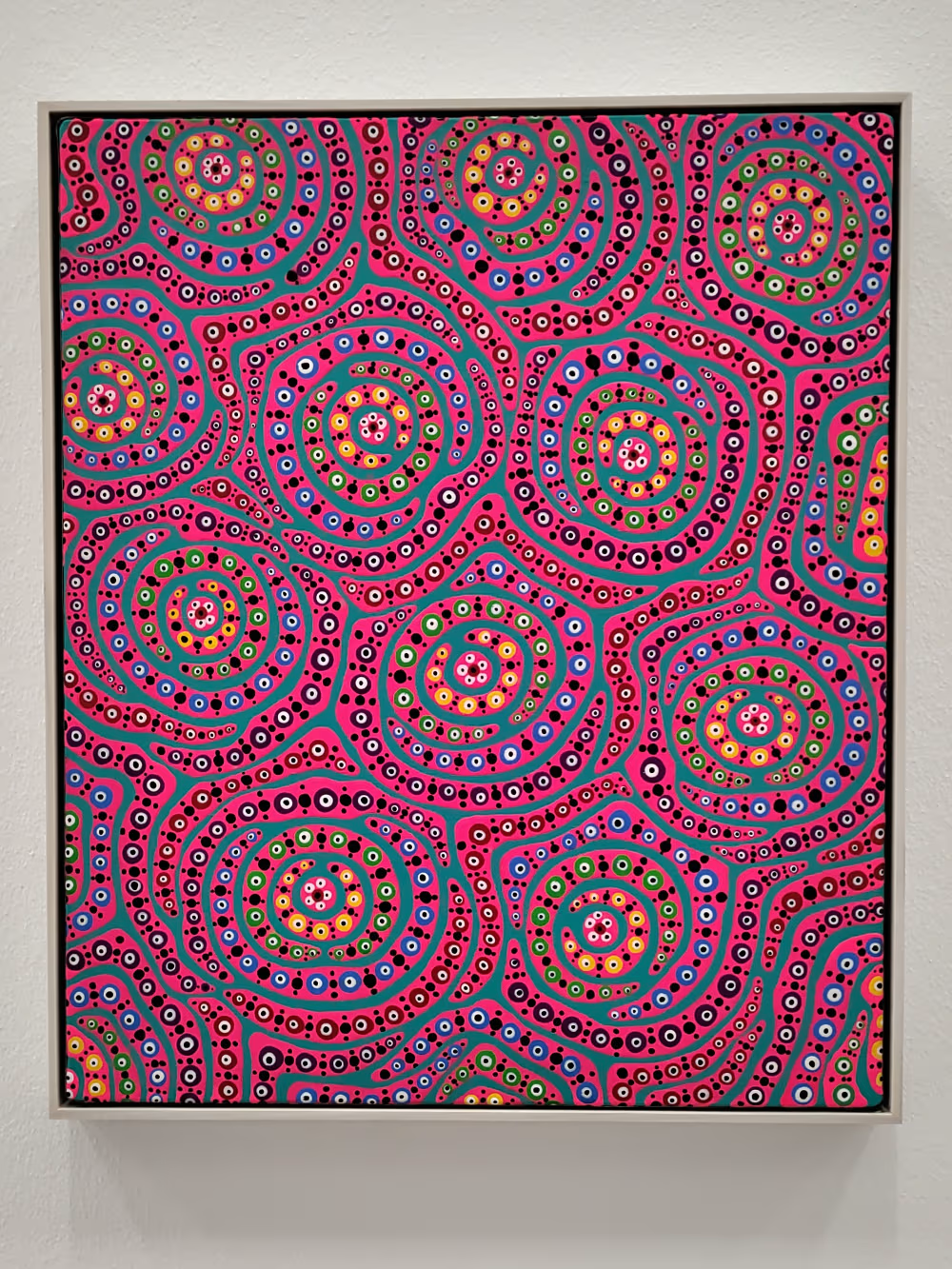
On top of that, Kusama also knows her way around words. Some of her poetry graced the museum’s walls and I would like to borrow a few lines of Polka Dot Café in the Universe to close this note.
My message I convey to you, my most beloved people, through my artwork, is the joy of being alive.
I will keep calling out to every person, “Love Is Forever,” with a message colored pink.
I will keep communicating with you, in the everlasting quietude of time.
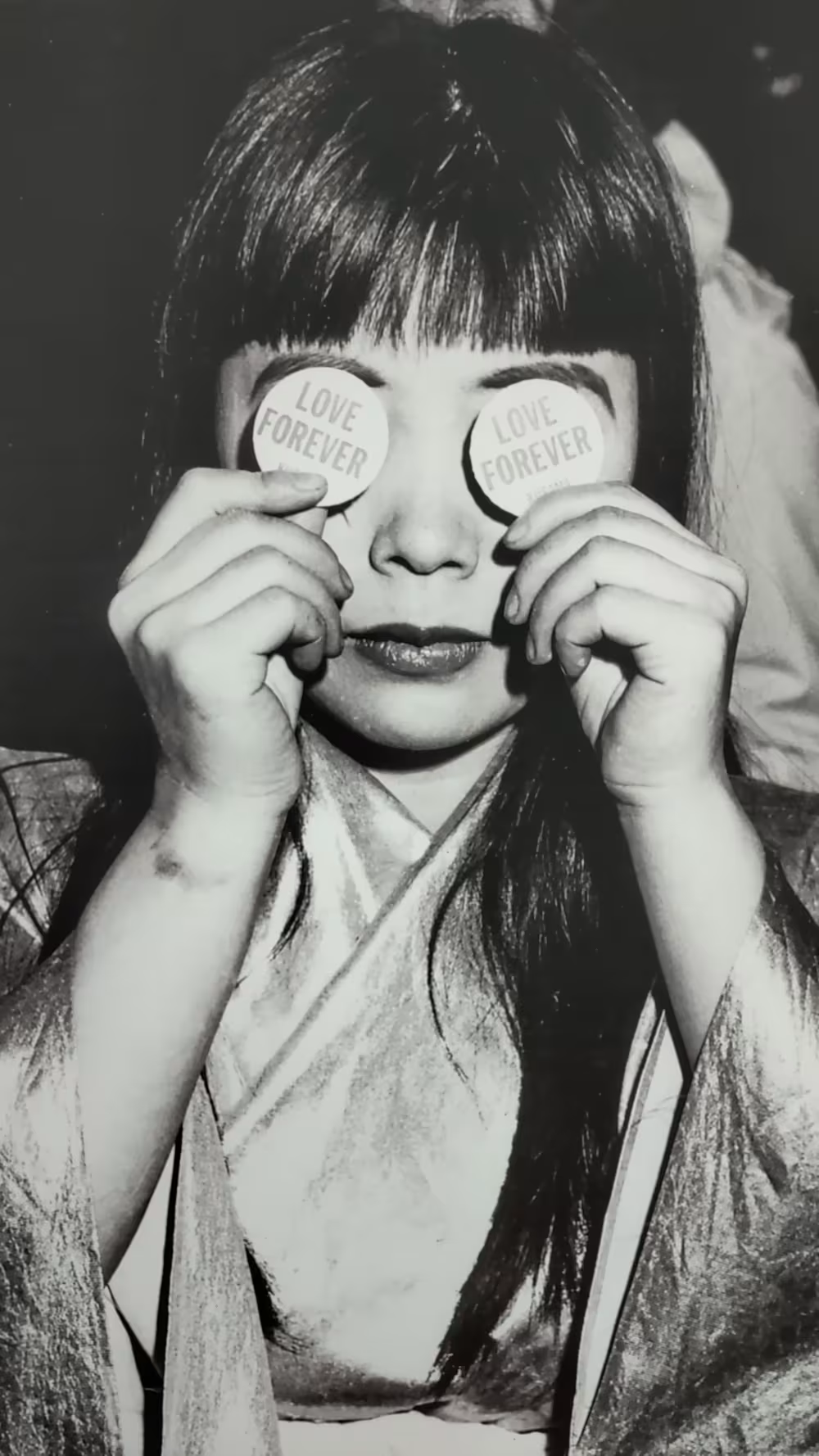
Kusama died on August 14, 2026, at the age of 97. Accepting that she’s dead, so soon after I’ve felt closer to her than ever before, is surreal. It charges my visit of the exhibition with gratitude and mystery.
More on the Matter
- The Kusama exhibition will continue at Stedelijk Museum in Amsterdam from 2026-09-11 to 2027-01-17.
- Gropius Bau in Berlin built a Kusama Digital Guide for their retrospective in 2021. Beautiful website with great layout, animations, and micro interactions.
- The blog on books Bücheratlas by Martin Oehlen and Petra Pluwatsch describes the exhibition as
spectacular
and focuses on the written works of Kusama.